What did you budget per square foot, all-in?
Stelr lists commercial polishing at $3–$8; Ace Avant lists urethane cement at $7–$18 by duty.
No votes yet. Yours will be the first. · saved on this device
Loading...
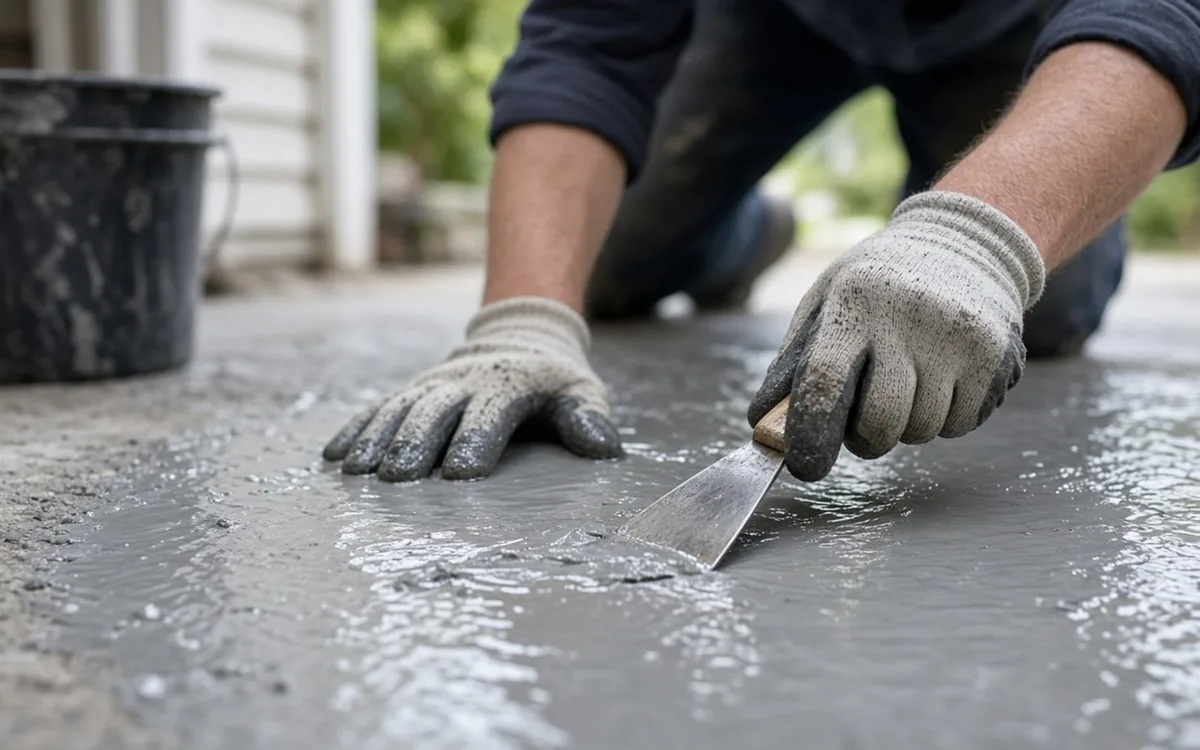
Facility Floor Scope · Industrial Epoxy Flooring cost guide
Published 2026 ranges put industrial epoxy systems at about $3 to $9 per square foot, MMA at $8 to $12, and urethane cement at $7 to $18 depending on duty, with large projects dropping to $4 to $8. Size, thickness, thermal exposure, moisture mitigation, coves, and phased night work move the price more than the resin brand.
Resin flooring prices look simple until three proposals arrive for the same room at $5, $9, and $16 per square foot. The spread is usually real: the bids describe different thicknesses, preparation, and scope. This guide explains how resin floors are priced so a facility can budget with confidence and tell a low bid from a thin one.
The figures come from named contractor guides published in 2025 and 2026. The cost table on this page lists the main line items and the calculator turns them into a range for your area; the sections below explain what sits behind those numbers, which line items carry the most risk, and where facility budgets usually go wrong.
| Item | Low | High | Unit | Notes |
|---|---|---|---|---|
| 100%-solids epoxy, installed | $3 | $9 | per sq ft | Ace Avant 2026; Terrapin lists $6–$10 in food settings |
| Urethane cement, standard duty | $7 | $13 | per sq ft | Ace Avant 2026; Craftsman $4–$17 by size |
| Urethane cement, thermal shock / wash-down | $12 | $18 | per sq ft | Ace Avant 2026 |
| MMA (methyl methacrylate) | $8 | $12 | per sq ft | Terrapin 2026 |
| Moisture mitigation layer | $2 | $4 | per sq ft | Jinyu 2026; Craftsman $1.50–$4.00 |
| Shot blasting | $0.5 | $0.97 | per sq ft | Craftsman 2025 |
| Cove base | $2 | $4 | per linear ft | Jinyu 2026 |
| 10,000 sq ft food processing floor with coves and drains | $120,000 | $180,000 | flat | Jinyu 2026 |
Duty class is the first sort. Ace Avant's 2026 guide places epoxy systems at $3 to $9 per square foot and tiers urethane cement at $7 to $13 for standard duty, $10 to $15 for heavy forklift traffic, and $12–$18 per sq ft for thermal-shock and wash-down builds. Terrapin puts 100 percent solids epoxy in food settings at $6 to $10 and MMA at $8–$12 per sq ft.
Within each class, thickness drives the spread. A two-coat epoxy at a few tens of mils sits at the bottom of its range; a broadcast system with a urethane topcoat sits in the middle; a troweled epoxy mortar approaches the top. Urethane cement at three-sixteenths of an inch prices well below a three-eighths build with integral coves. Always compare bids by thickness and build, not by product family.
Two installers publish system-level tiers that fill in the middle of those ranges. AIcoat's May 2026 guide splits epoxy by build, and Black Bear Concrete's September 2026 guide prices chemical-resistant coatings without a mortar or urethane cement layer at $8 to $15. The table in this section lines up every published tier by the facility it usually serves; all figures are installed prices per square foot, and the installer rows are seller pricing.
| System | Typical facility | Installed per sq ft | Source |
|---|---|---|---|
| Standard epoxy, two coats | Dry storage, light assembly | $3–$5 | AIcoat 2026 |
| Epoxy systems, all builds | Dry manufacturing, warehousing | $3–$9 | Ace Avant 2026 |
| Flake or quartz broadcast | Locker rooms, labs, light wet areas | $5–$9 | AIcoat 2026 |
| High-build epoxy, 100% solids | Manufacturing with carts and pallet jacks | $5–$8 | AIcoat 2026 |
| 100% solids epoxy, food setting | Dry food packaging and storage | $6–$10 | Terrapin 2026 |
| Chemical-resistant coating, no mortar | Battery rooms, chemical storage | $8–$15 | Black Bear 2026 |
| MMA fast-cure | Coolers, overnight retail and kitchen jobs | $8–$12 | Terrapin 2026 |
| Urethane cement, standard duty | Wet processing, light traffic | $7–$13 | Ace Avant 2026 |
| Urethane mortar | Food and wet processing | $8–$15 | AIcoat 2026 |
| Urethane cement, heavy forklift | Wet docks, heavy traffic lanes | $10–$15 | Ace Avant 2026 |
| Urethane cement, thermal shock | Steam and hot wash-down rooms | $12–$18 | Ace Avant 2026 |
Substantially. Craftsman prices urethane cement at $4–$17 per sq ft across its size bands: $11 to $14 per square foot under 3,000 square feet, $8 to $12 from 3,000 to 10,000, $5 to $9 from 10,000 to 50,000, and $4 to $8 above 50,000. Mobilization, supervision, testing, and equipment are largely fixed per job, so they spread thinner as area grows.
The practical lesson is to bundle. A plant with three rooms needing new floors over the next few years will usually pay less per square foot by awarding them together, even if they are installed in separate shutdowns. When budgeting a small area, use the top of the published range, and ask bidders to state their mobilization charge separately so it can be compared.
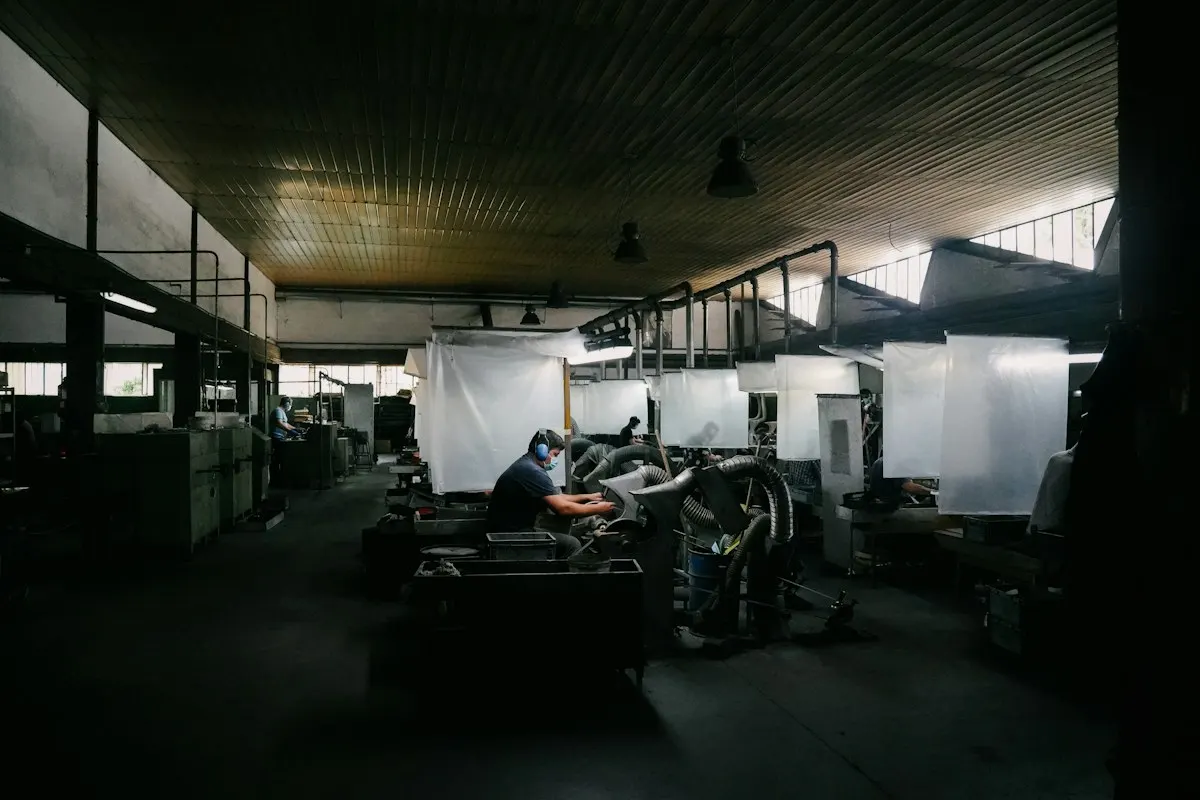
Jinyu Paint's 2026 breakdown for urethane cement puts materials at 40 to 50 percent, labor at 30 to 40 percent, surface preparation at 10 to 20 percent, and overhead at 5 to 10 percent of the installed price. Thin epoxy coatings shift the balance toward labor and preparation, because the resin volume is small while the preparation is the same.
That breakdown explains where savings are real and where they are false. Material costs track resin volume, so thinner systems save material but lose durability. Preparation is a small share of the price but decides whether the floor bonds, so it is the worst place to economize. Labor shifts most with access, phasing, and night work, which a facility can sometimes influence directly. BLS puts the flooring occupation group's median wage at $54,390 and projects only 4% employment growth from 2025 to 2035, so experienced resin crews are unlikely to get cheaper.
Moisture mitigation is the largest common add-on. Jinyu prices it at $2 to $4 per square foot, which can add a large share to a thin epoxy system. Shot blasting at $0.50 to $0.97 per square foot in Craftsman's figures is usually part of the base price but may be separate if the old coating is thick. Existing floor removal, integral cove at $2 to $4 per linear foot, and drain terminations add further.
Joint and crack treatment, trench drain edges, and transitions to other systems are priced by the linear foot or as allowances. On a detail-heavy food plant floor, those linear items can add a meaningful share to the square-foot price. Ask each bidder to list them separately with unit rates so the facility can see exactly what the base price covers and what it does not.
Phased night and weekend work raises labor cost and adds mobilizations, barriers, and cleanup. AIcoat puts the premium for phased work in an occupied facility at 25–40% over a single shutdown window, so a floor installed in six weekend windows costs noticeably more per square foot than the same floor done in one continuous shutdown. The trade-off is lost production during a longer shutdown, which is often the larger number.
System choice also moves the schedule. Craftsman lists 24 hrs / 48–72 hrs for self-leveling versus troweled urethane cement, and rapid-set products can reach foot traffic in 8 to 12 hours according to Terrapin. MMA cures in about an hour. A faster system can cost more per square foot but less overall if it saves a day of lost output. Compare installed price plus downtime value, not installed price alone.
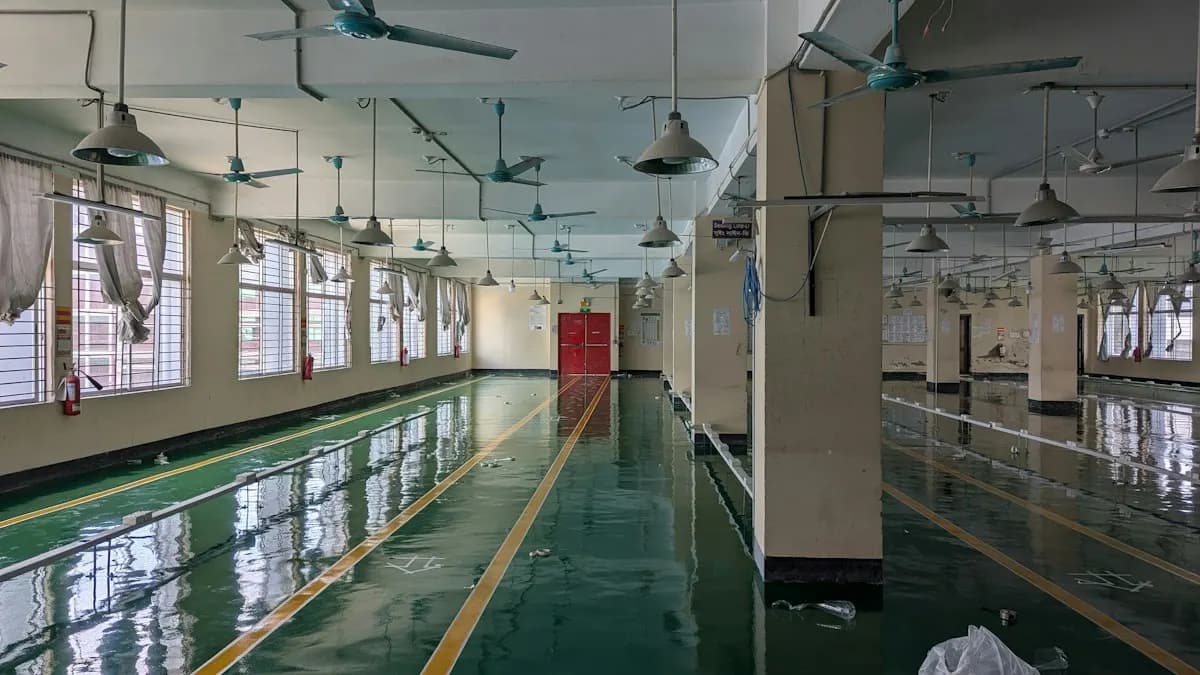
No published source gives reliable regional multipliers for resin flooring, so treat any percentage with caution. Local labor rates, the number of experienced crews nearby, travel for rural sites, and prevailing-wage rules on public or institutional work all move price. A plant several hours from the nearest specialist will pay for travel, lodging, and extra mobilizations.
Season matters through temperature. Resin cure slows on cold slabs, so winter work in unheated plants may need heated enclosures, which add cost and time. Humid regions and older slabs without vapor retarders see more moisture mitigation. Ask each bidder to list travel, climate control, and mitigation separately, so local and distant contractors can be compared on equal terms.
Cut scope before cutting specification. Phase the least critical zones into a later budget year, reduce decorative elements such as color flake or multiple colors, choose a standard color over a custom one, and simplify transitions where possible. Accept a slightly longer schedule if it lets the contractor work continuous shifts instead of short night windows.
Do not cut preparation, moisture testing, thickness in wet or impact areas, or cove detailing at walls and drains. These are where failures begin, and a failure costs far more than the savings. Terrapin's case of a plant that saved about $350,000 upfront and then spent $1.1M on replacement shows the downside of cutting the wrong thing.
A 5,000 square foot dry manufacturing area in an epoxy system at Ace Avant's $3 to $9 would budget roughly $15,000 to $45,000, before moisture mitigation or removal. A 10,000 square foot warehouse in standard urethane cement, per Ace Avant's own example, budgets $70,000 to $150,000. Jinyu budgets a 10,000 square foot food processing floor with coves and drains at $120,000–$180,000.
Run your own zones in the cost calculator, read the epoxy versus urethane cement comparison for the lifecycle view, and compare the results with proposals. The resin flooring service page explains the specification choices that affect these numbers, and the 2026 cost guide compares resin against the other systems.
By the numbers
Planning figures from published U.S. sources; every card links to where the number came from.
$12–$18 per sq ft
Thermal-shock-rated urethane cement for wash-down areas costs $12–$18 per sq ft (2026)
Ace Avant's 2026 guide tiers urethane cement at $7–$13 (standard duty), $10–$15 (heavy forklift traffic), $12–$18 (thermal shock and wash-down) and $15–$20 (decorative quartz) per square foot, versus $3–$9 for epoxy and $2–$6 for polished concrete. A 10,000 sq ft warehouse budgets $70,000–$150,000.
Ace Avant, urethane cement flooring cost (2026)$4–$17 per sq ft
Urethane cement installs for $4–$17 per sq ft; jobs above 50,000 sq ft drop to $4–$8 (2025)
Craftsman Concrete Floors prices urethane cement at $11–$14 per square foot under 3,000 sq ft, $8–$12 for 3,000–10,000, $5–$9 for 10,000–50,000 and $4–$8 above 50,000. Project size is the single biggest price lever. Contractor-published.
Craftsman Concrete Floors, urethane cement flooring cost (2025)$8–$12 per sq ft
MMA (methyl methacrylate) flooring installs at roughly $8–$12 per sq ft (2026)
Terrapin prices MMA at $8–$12 and 100%-solids epoxy at $6–$10 per square foot, alongside $8–$16 for urethane cement. MMA's draw is a cure measured in hours and cold-temperature application, so it fits coolers and overnight retail turnarounds.
Terrapin Construction Group, urethane cement flooring for food processing (2026)$120,000–$180,000
A 10,000 sq ft food processing floor with coves and drains budgets $120,000–$180,000 (2026)
Jinyu's FDA/USDA flooring guide prices urethane cement (6–9 mm) at $8–$15, epoxy at $3–$8, MMA at $7–$12 and VCT at $2–$5 per square foot, with cove base at $2–$4 per linear foot and a 1/4 inch per foot slope to drain. It cites FDA Food Code 6-101.11 (smooth, durable, easily cleanable, nonabsorbent floors).
Jinyu Paint, FDA and USDA compliant flooring for food processing plants (2026)The calculator uses the same commercial and industrial flooring benchmarks as this guide. Set the size and tier, then request a written estimate to check it against a real proposal.
Homeowner polls
Stelr lists commercial polishing at $3–$8; Ace Avant lists urethane cement at $7–$18 by duty.
No votes yet. Yours will be the first. · saved on this device
No votes yet. Yours will be the first. · saved on this device
No votes yet. Yours will be the first. · saved on this device
Usually because they describe different floors. One bid may be a thin two-coat epoxy, another a broadcast system with topcoat, and a third a quarter-inch urethane cement. Preparation, moisture testing, coves, and exclusions also vary. Line up thickness, preparation, and exclusions before comparing totals, and ask each bidder to explain how their system meets the brief.
Usually not. Its advantages are thermal shock and moisture tolerance, which dry areas do not need. A properly prepared epoxy system with a wear topcoat serves dry manufacturing and warehousing well at lower cost. Reserve urethane cement for wet, hot, or freezer zones, and specify by zone so each area gets the system its exposure requires.
Jinyu prices it at $2 to $4 per square foot, and Craftsman at $1.50 to $4. On a thin epoxy system, that can add a large share of the base price. Ask for moisture testing before award and a unit price for mitigation, so the budget can be adjusted if readings exceed the system's limit rather than discovered mid-project.
More than a large one. Craftsman prices urethane cement at $11 to $14 per square foot under 3,000 square feet, compared with $4 to $8 above 50,000. Small epoxy jobs follow the same pattern. Bundle small areas where possible, and ask for the mobilization charge separately so you can see how much of the unit price it represents.
It includes an add-on allowance for coves, drains, and transitions, sized for a mid-size zone. For a detail-heavy floor with long perimeters and many drains, scale the allowance up using Jinyu's $2 to $4 per linear foot for cove and contractor pricing for drain terminations. Proposals should list these items separately.
AIcoat, an installer, puts phased work in an occupied facility at 25 to 40 percent above a single shutdown window. The premium comes from night and weekend labor rates, extra mobilizations, daily cleanup, and the lower output of short windows. Ask bidders to price both a continuous shutdown and the phased schedule so the facility can compare the premium against the cost of lost production.
Traffic lanes and turning areas wear first, and topcoats are typically renewed there on a cycle that depends on traffic and cleaning. Recoating costs much less than a new floor but requires preparation and a cure window. Ask each bidder for the expected recoat cycle under your conditions and its approximate cost per square foot.
 Polished Concrete Floors · Cost guideCommercial polished concrete cost in 2026
Commercial polishing runs about $3 to $8 per square foot on a sound slab in 2026, with matte finishes at the low end and high gloss up to $15.
 ESD & Anti-Static Flooring · Cost guideESD and anti-static flooring cost in 2026
Craftsman Concrete Floors' published figures put installed ESD resin floors at $3.34 to $13.55 per square foot, falling steeply with size: $6.70 to $13.55 under 5,000 square feet and $3.34 to $4.40 above 20,000.
 Antimicrobial & Healthcare Flooring · Cost guideHealthcare and antimicrobial flooring cost in 2026
Published 2026 figures put healthcare-grade seamless resin at about $3 to $8 per square foot for epoxy and $8 to $15 for urethane cement, plus $2 to $4 per linear foot of integral cove.
 Service guideIndustrial Epoxy Flooring
Industrial resin flooring is a family of seamless systems, epoxy, urethane cement, MMA, and hybrids, bonded to a prepared concrete slab and built to resist the chemicals, loads, temperatures, and cleaning a facility subjects it to.
Service guidePolished Concrete FloorsCommercial concrete polishing grinds and densifies the existing slab through progressively finer diamonds until it becomes a hard, dust-free wear surface.
Service guideAntimicrobial & Healthcare FlooringHealthcare flooring covers seamless resin, welded sheet vinyl and rubber, and coved, drained systems chosen so that a facility's cleaning and infection-control program can be carried out on them.
 Free toolCommercial and industrial flooring cost calculator
Size, material tier and complexity in, a realistic budget range out.
 Free toolCommercial flooring comparisons
Side-by-side tables for the decisions that change the price most.
 Free toolIs your facility flooring requirement complete enough to bid?
8 questions that show what you already know and what to check next.
 Free toolFacility flooring polls: how other managers decided
See what other planners chose and add your vote.
Tell us the size, the condition of what is there now, and what you want to change. Facility Floor Scope passes your request to independent local professionals, who reply with written, no-obligation estimates. The service is free to use.