Have you seen a facility resin floor fail before?
No votes yet. Yours will be the first. · saved on this device
Loading...
Facility Floor Scope · Service guide
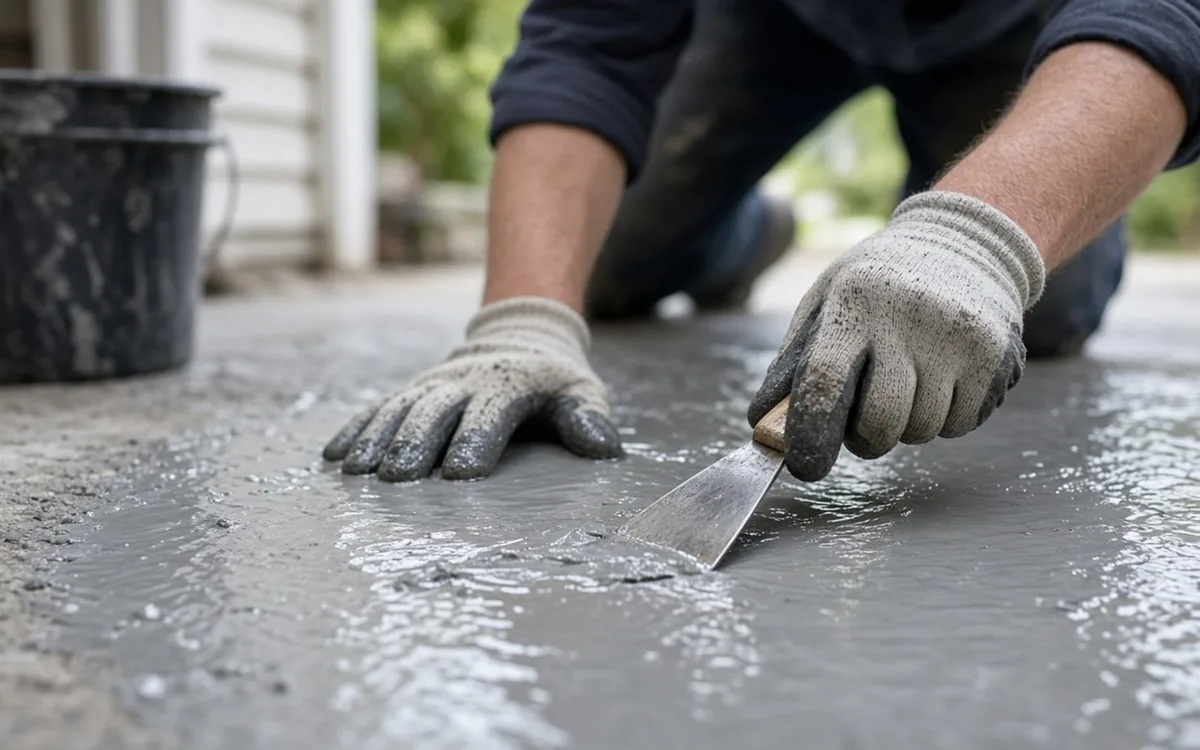
Industrial resin flooring is a family of seamless systems, epoxy, urethane cement, MMA, and hybrids, bonded to a prepared concrete slab and built to resist the chemicals, loads, temperatures, and cleaning a facility subjects it to. It suits wet processing, kitchens, chemical handling, and vehicle service areas. Installed costs run from $3 to $9 per square foot for epoxy to $12 to $18 for thermal-shock urethane cement.
The word epoxy is used for the whole category, which is how facilities end up with the wrong floor. Standard epoxy is a rigid, chemically resistant resin that tolerates about 120°F of thermal shock according to Terrapin Construction Group. A food plant that steam-cleans at 180 to 200°F and rinses at 40°F subjects the floor to a 160°F swing, 2–3x daily cycle. Craftsman Concrete Floors reports standard epoxy delaminating within 12 to 24 months under that regime, while urethane cement is rated for -40°F to 250°F.
This page treats resin flooring as a specification problem: which chemistry for which exposure, what each costs by project size, what preparation and detailing every system needs, and how to read a proposal. If the area is dry and the slab is sound, read the polished concrete page first; a resin floor may be more than the operation needs.
Want the numbers only? Read the industrial epoxy flooring cost guide for 2026 ranges, what moves the price, and sample budgets.
| Item | Low | High | Unit | Notes |
|---|---|---|---|---|
| 100%-solids epoxy, installed | $3 | $9 | per sq ft | Ace Avant 2026; Terrapin lists $6–$10 in food settings |
| Urethane cement, standard duty | $7 | $13 | per sq ft | Ace Avant 2026; Craftsman $4–$17 by size |
| Urethane cement, thermal shock / wash-down | $12 | $18 | per sq ft | Ace Avant 2026 |
| MMA (methyl methacrylate) | $8 | $12 | per sq ft | Terrapin 2026 |
| Moisture mitigation layer | $2 | $4 | per sq ft | Jinyu 2026; Craftsman $1.50–$4.00 |
| Shot blasting | $0.5 | $0.97 | per sq ft | Craftsman 2025 |
| Cove base | $2 | $4 | per linear ft | Jinyu 2026 |
| 10,000 sq ft food processing floor with coves and drains | $120,000 | $180,000 | flat | Jinyu 2026 |
Resin floors earn their cost where concrete alone fails: wet processing, commercial kitchens, breweries and dairies, chemical and battery areas, vehicle service bays with hydraulic fluid and brake cleaner, pharmaceutical and lab spaces with solvent exposure, and any area with wash-down or drains. By our analysis of EIA's 2018 building survey, the stock alone holds 267,000 vehicle service or repair buildings on 1,923 million sq ft, plus 924 million sq ft of restaurant and cafeteria floorspace. They also fit where a seamless, coved, sloped surface is required by a sanitation program; Jinyu's compliance guide cites FDA Food Code 6-101.11's requirement for smooth, durable, easily cleanable, nonabsorbent floors.
They are usually the wrong answer for a dry distribution center or retail floor, where a $3-to-$8-per-square-foot polish outperforms a coating on lifecycle cost and needs no recoat. They are also wrong when the specific resin does not match the exposure: an epoxy under thermal shock, an MMA where its odor during cure cannot be isolated from occupied space, a urethane cement where budget forces a thin build. The epoxy versus urethane cement comparison handles the most common of those mismatches.
Epoxy is the baseline: 100%-solids systems build thick, resist a wide range of chemicals, accept quartz or flake broadcast for texture, and cost the least. Terrapin prices 100%-solids epoxy at $6 to $10 per square foot in food settings; Ace Avant lists $3 to $9 more generally. Its limits are thermal shock and cure time, 48 to 72 hours to foot traffic in Terrapin's account. Polyurethane and polyaspartic topcoats are commonly added over epoxy for UV stability and abrasion resistance.
Urethane cement is a cementitious urethane applied at 3/16 to 3/8 inch for standard duty. It handles thermal shock, moisture from below better than epoxy, and heavy forklift traffic. Craftsman lists a 15-to-20-plus-year life during which standard epoxy would be replaced at least twice, and Jinyu cites 25-plus years of documented service. MMA (methyl methacrylate) is an acrylic that cures in about an hour, applies at low temperatures, and suits overnight retail or cooler work at $8 to $12 per square foot per Terrapin, with a strong odor during cure that must be ventilated away from occupied areas.
| System | Installed per sq ft | Thermal tolerance | Return to service | Source |
|---|---|---|---|---|
| 100%-solids epoxy | $3–$9 general; $6–$10 food | ~120°F thermal shock | 48–72 hrs foot traffic | Ace Avant 2026; Terrapin 2026 |
| Urethane cement, standard | $7–$13 | -40°F to 250°F | 24 hrs self-leveling; 48–72 trowel | Ace Avant 2026; Craftsman 2025 |
| Urethane cement, thermal shock | $12–$18 | 250°F+ | 8–12 hrs rapid-set foot traffic | Ace Avant 2026; Terrapin 2026 |
| MMA | $8–$12 | Cold-application capable | About 1 hour | Terrapin 2026 |
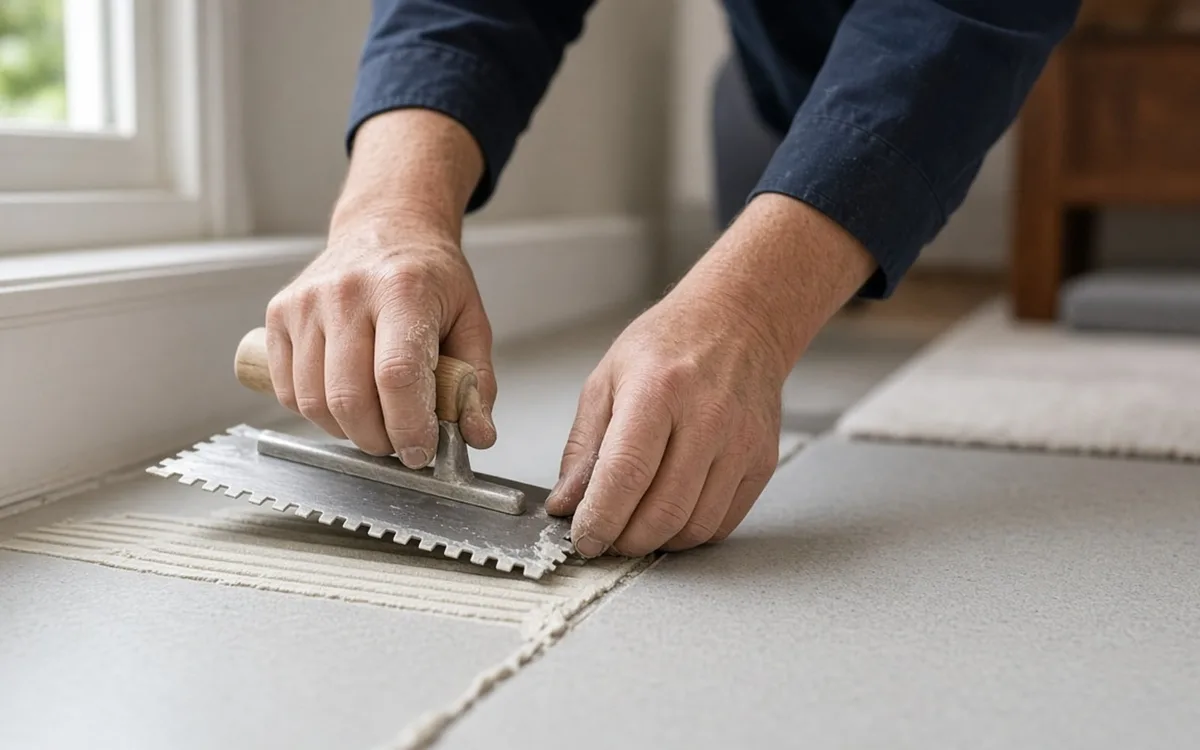
Project size is the largest price lever after system choice. Craftsman's urethane cement pricing runs $4–$17 per sq ft: $11 to $14 under 3,000 square feet, $8 to $12 for 3,000 to 10,000, $5 to $9 for 10,000 to 50,000, and $4 to $8 above 50,000. Mobilization, mockup, testing, and crew setup are fixed; on a 2,000-square-foot kitchen they are a third of the bid. Ace Avant budgets a 10,000-square-foot warehouse at $70,000 to $150,000 across its urethane cement tiers.
Jinyu's 2026 cost breakdown allocates materials at 40 to 50% of a urethane cement project, labor 30 to 40%, surface preparation 10 to 20%, and overhead 5 to 10%, with moisture mitigation adding $2 to $4 per square foot when the slab requires it. Detailing adds real money: cove base at $2 to $4 per linear foot and a 1/4-inch-per-foot slope to drains in food areas. A full 10,000-square-foot food processing floor with coves and drains budgets $120,000–$180,000 in Jinyu's guide. The calculator applies a size-sensitive base and flat detailing allowances, and the industrial epoxy flooring cost guide breaks the price into system tiers, add-ons, and phasing premiums.
Preparation comes first and takes the longest. Existing coatings are removed by shot blasting or grinding; Craftsman lists shot blasting at $0.50 to $0.97 per square foot. The slab is profiled to the manufacturer's target, typically CSP 3 to 5 for thick industrial systems, cracks and joints are chased and filled, and moisture is tested by in-slab relative humidity or calcium chloride. If the reading exceeds the system's limit, a mitigation layer goes down first or the project stops for a decision.
The build then follows the data sheet: primer, body coat (self-leveling or trowel-applied), optional broadcast for texture, and topcoat. Coves are formed before the body coat; drains and transitions are detailed as they are reached. Cure is by activity: foot traffic, rolling loads, wash-down, and full chemical exposure each have a time at a stated slab temperature. Craftsman lists 24 hrs / 48–72 hrs for self-leveling versus trowel urethane cement, and 1 to 3 weeks of lead time from contract. Phasing an occupied plant means repeating the sequence per zone with barriers and negative air.
Delamination from thermal shock is the signature failure in wet processing. Hot water expands the rigid resin faster than the concrete beneath it, the bond shears, and the floor lifts in sheets; Craftsman's 12-to-24-month figure for epoxy under daily wash-down is the timeline. Moisture from below is second: an impermeable resin over a slab that was never tested traps vapor until it blisters. Third is mechanical: cove bases that crack where a cart hits them, drain terminations that were not sealed, and joints filled rigid over a moving slab.
The costly version of these failures is the one Terrapin describes: a 65,000-square-foot plant chose $6.50-per-square-foot epoxy to save about $350,000, then spent $1.1M on replacement and lost two to three days of production worth $50,000 or more. The lesson is not that urethane cement is always right; it is that the exposure decides, and a resin chosen against its data sheet's limits fails on schedule.
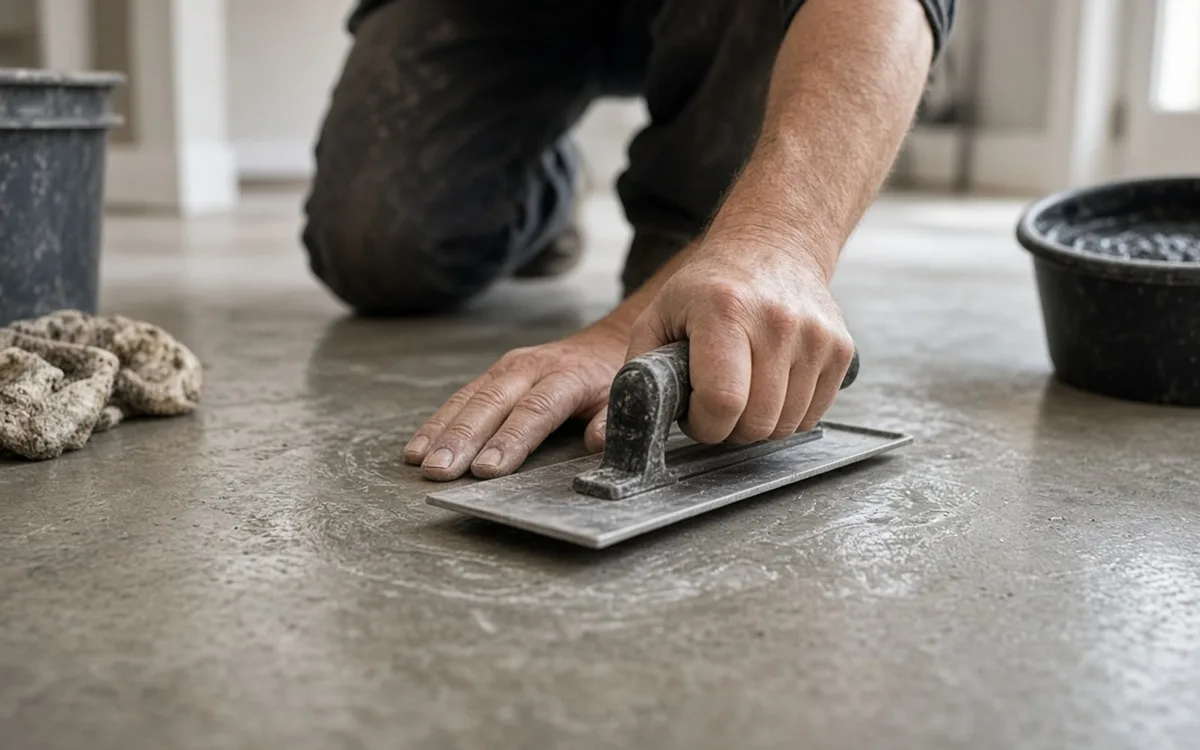
Texture is a decision that operations, sanitation, and safety have to make together. Jinyu's compliance guide cites ≥0.60 wet SCOF under ANSI/NFSI B101.1 as the usual wet-area expectation. Coarser broadcast improves grip and holds more soil, which slows cleaning and can fail a swab test; finer texture cleans fast and gets slick under grease. The Liberty Mutual index puts same-level falls at $10.26 billion/yr in direct employer costs, so this is not a cosmetic choice.
Ask for texture grades as a sample panel, wet them with the actual cleaning agent, and have the sanitation lead run a squeegee across each. Then specify the grade, the coefficient-of-friction test method, and a post-installation test with a witnessed result. A contractor who will warrant a texture against a named test method is committing to something; one who says slip-resistant is not.
Resin floors are maintained by cleaning with compatible agents at the temperatures the system tolerates, repairing impact damage promptly before water gets under the edge, and recoating the topcoat before wear reaches the body coat. A urethane cement floor with a 15-to-25-year life may still need its topcoat refreshed at year 8 to 10 in high-traffic lanes; an epoxy in a dry area may run a decade before a screen-and-recoat. Keep product names, batch numbers, and the data sheets in the facility file so a recoat is compatible. The healthcare flooring page covers cleaning-agent compatibility in more depth.
Cold-climate loading docks and unheated warehouses push cure times out and favor MMA or rapid-set urethane for winter work; epoxy stalls below the slab temperatures common in a northern January. Humid Gulf Coast and Southeastern slabs run high on vapor emission, which makes moisture mitigation a routine line rather than a contingency. Food retail is everywhere, too: CBECS counts 163,000 food sales buildings and 70,000 fast food buildings nationally, each with a back-of-house floor that sees grease and hot water. Hot Southwestern facilities with door-side sun favor UV-stable topcoats. The regional planning notes cover slab and climate differences by region.
Check the named system against the exposure brief: thermal range, chemical list, cleaning temperature, and traffic, with the data sheet attached. Confirm the preparation method and profile, the moisture test method and result, and the mitigation plan if it fails. Look for coves, drains, and transitions as line items with a detail drawing. Confirm return-to-service times by activity at a stated temperature, and a phasing plan if the facility stays open. Require a witnessed acceptance test for slip resistance and, where relevant, adhesion, plus a warranty whose exclusions do not cover the exposures in your brief.
Then normalize per square foot by zone. A bid that is $2 per square foot higher may carry the mitigation layer and the cove detail the other left out. Use the proposal request to get several proposals against the same brief, and the references guide to verify installations at facilities with the same exposures as yours.
Homeowner polls
No votes yet. Yours will be the first. · saved on this device
Terrapin rates epoxy at about 120°F of thermal shock and urethane cement at 250°F or more.
No votes yet. Yours will be the first. · saved on this device
No votes yet. Yours will be the first. · saved on this device
 Service guidePolished Concrete Floors
Commercial concrete polishing grinds and densifies the existing slab through progressively finer diamonds until it becomes a hard, dust-free wear surface.
 Service guideAntimicrobial & Healthcare Flooring
Healthcare flooring covers seamless resin, welded sheet vinyl and rubber, and coved, drained systems chosen so that a facility's cleaning and infection-control program can be carried out on them.
 Service guideESD & Anti-Static Flooring
ESD flooring is a conductive or static-dissipative floor system, epoxy, urethane, vinyl tile, or rubber, bonded to a grounded conductive layer so that charge on people and carts drains safely.
It depends on system and duty. Craftsman lists standard-duty urethane cement at 3/16 to 3/8 inch; Jinyu specifies 6 to 9 mm for food plants. Epoxy coatings for dry areas may be 20 to 40 mils total. Thickness is set by impact and thermal load, not by preference, so ask the contractor to state the build per layer and the data sheet it comes from.
Only if the existing coating is fully bonded, compatible, and confirmed by adhesion testing, and even then most industrial systems require removal to bare, profiled concrete. Overcoating a failing floor transfers its failure upward. Removal by shot blasting is a modest line, $0.50 to $0.97 per square foot per Craftsman, compared with a second replacement.
It should mean several dates, not one: foot traffic, rolling loads, wash-down at temperature, and full chemical exposure, each at a stated slab temperature. Craftsman lists 24 hours for self-leveling urethane cement and 48 to 72 for trowel builds; Terrapin lists 8 to 12 hours for rapid-set foot traffic. A single number is a red flag.
MMA has a strong odor during its short cure that must be ventilated away from occupied areas and ignition sources. Contractors isolate the zone, run exhaust, and schedule overnight. It is routinely done in retail and cold storage. Say in the brief what will be occupied nearby so the proposal includes the isolation plan.
Coves are formed integrally with the body coat to a stated height, usually 4 to 6 inches, and drains are detailed with the resin terminating into the drain flange with a sealant. Jinyu prices cove base at $2 to $4 per linear foot and notes a 1/4-inch-per-foot slope to drains in food areas. Both belong on the proposal as measured lines.
Standard-duty systems handle rubber-tired forklifts; hard polyurethane wheels and steel-wheeled carts concentrate load and wear turning points faster. Ace Avant tiers urethane cement for heavy forklift traffic at $10 to $15 per square foot. Give the contractor the truck type, wheel material, and gross weight so the build is specified for it.
Neither means anything without a test method and a value. Ask for the coefficient of friction the texture grade achieves under ANSI/NFSI B101.1 or the method your safety program uses, and for a post-installation test. The sample panel wetted with your cleaning agent is the practical check.
Craftsman lists 15 to 20-plus years for standard-duty builds and Jinyu cites 25-plus years of documented service, with topcoat refreshes along the way. Both sell the product, so treat the figures as manufacturer-side claims. The mechanism is credible: a floor that tolerates the thermal cycle does not delaminate, and delamination is what ends resin floors early.
 Free toolCommercial and industrial flooring cost calculator
Size, material tier and complexity in, a realistic budget range out.
 Free toolCommercial flooring comparisons
Side-by-side tables for the decisions that change the price most.
 Free toolIs your facility flooring requirement complete enough to bid?
8 questions that show what you already know and what to check next.
 Free toolFacility flooring polls: how other managers decided
See what other planners chose and add your vote.
Tell us the size, the condition of what is there now, and what you want to change. Facility Floor Scope passes your request to independent local professionals, who reply with written, no-obligation estimates. The service is free to use.