For ESD floors, who owns the program limits and retest schedule?
No votes yet. Yours will be the first. · saved on this device
Loading...
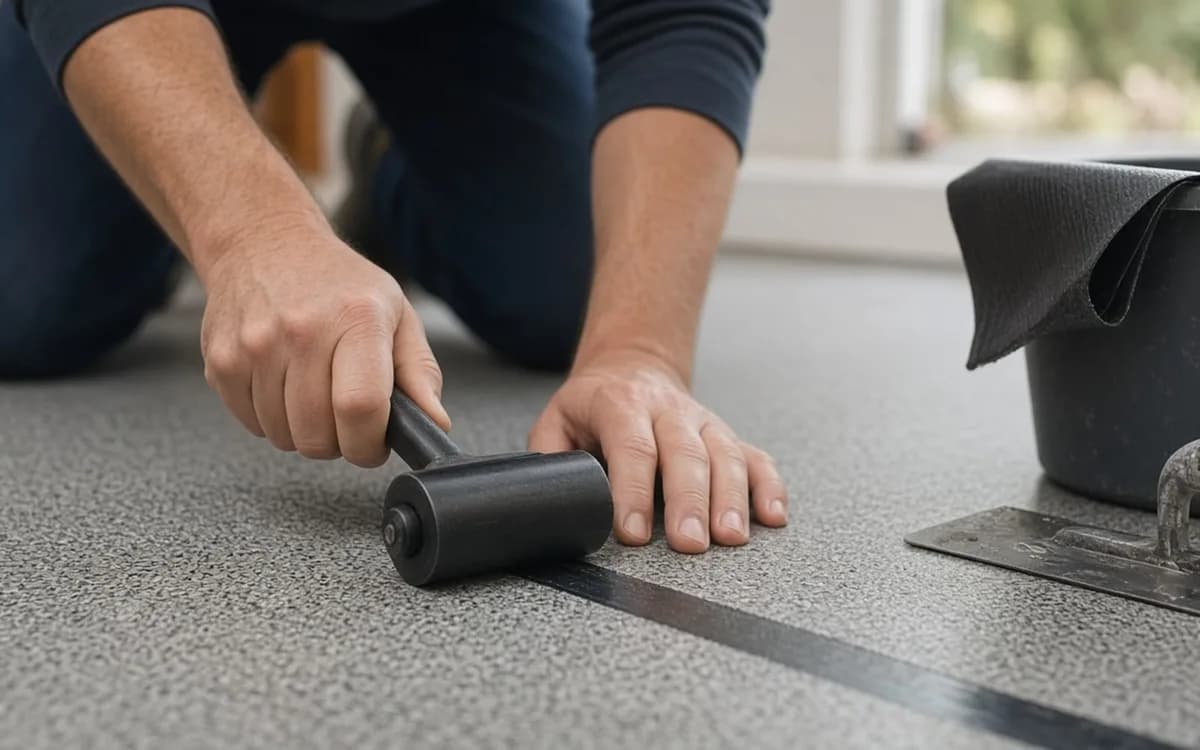
Facility Floor Scope · ESD & Anti-Static Flooring cost guide
Craftsman Concrete Floors' published figures put installed ESD resin floors at $3.34 to $13.55 per square foot, falling steeply with size: $6.70 to $13.55 under 5,000 square feet and $3.34 to $4.40 above 20,000. Grounding, acceptance testing, surface preparation, moisture mitigation, and small repair areas are the items that move an ESD budget most.
ESD floors are priced like other resin systems with two additions: a grounded conductive layer and resistance testing that proves the floor meets the static-control program's limits. Those additions are small in a large floor and significant in a small one, which is why the published unit prices span a factor of four.
This guide explains the price curve, what grounding and testing add, where preparation and moisture change the budget, and how to plan for the retesting and cleaning an ESD floor needs over its life. The cost table and calculator on this page give the ranges; the sections below explain them.
| Item | Low | High | Unit | Notes |
|---|---|---|---|---|
| ESD flooring under 5,000 sq ft | $6.7 | $13.55 | per sq ft | Craftsman 2025 |
| ESD flooring 5,000–20,000 sq ft | $3.93 | $8.15 | per sq ft | Craftsman 2025 |
| ESD flooring over 20,000 sq ft | $3.34 | $4.4 | per sq ft | Craftsman 2025 |
| Shot blasting | $0.5 | $0.97 | per sq ft | Craftsman 2025 |
| Moisture mitigation | $1.5 | $4 | per sq ft | Craftsman 2025 |
| Small repair (about 75 sq ft) | $40 | $63 | per sq ft | Craftsman 2025; mobilization-dominated |
Craftsman Concrete Floors publishes the clearest size curve: $3.34–$13.55 per sq ft overall, with $6.70 to $13.55 per square foot under 5,000 square feet, $3.93 to $8.15 from 5,000 to 20,000, and $3.34 to $4.40 above 20,000. Those figures cover the installed coating tested to ANSI/ESD S20.20 methods, before separate preparation and moisture items.
Its completed projects show the curve in practice: a 67,000 square foot data center at $3.59 per sq ft, a 34,000 square foot electronics plant at $4.21, a 114,760 square foot battery plant at $3.91, and a 3,200 square foot aerospace facility at $10.15. Small areas carry the same mobilization, grounding, and test setup as large ones, spread over far fewer square feet.
Grounding means copper strips or ground points tied to a verified building ground, laid before or within the conductive primer. The number of points depends on area and system. It is a modest cost on a large floor and a noticeable one on a small room. Ask bidders to show the ground point layout and include the connection to building ground in their price. Craftsman's quoted scope, for comparison, includes copper ground straps tied to building ground per ANSI/ESD S20.20 and resistance testing point-to-ground and point-to-point documented to STM 97.1 and STM 97.2.
Acceptance testing to the program's resistance limits takes time, equipment, and often a witness. Many facilities also want a baseline report for future audits. Testing is inexpensive relative to the floor, but it must be in the contract; a floor that has not been tested and documented cannot be relied on in an audit. Include retesting after any repairs in the scope.
Where the facility has its own ESD coordinator, have them witness the acceptance test with their own calibrated meter. Agreement between two sets of readings removes most later disputes, and the coordinator gains a baseline for the program's routine audits at no extra cost to the project. Record the humidity and temperature at the time of testing alongside the readings.
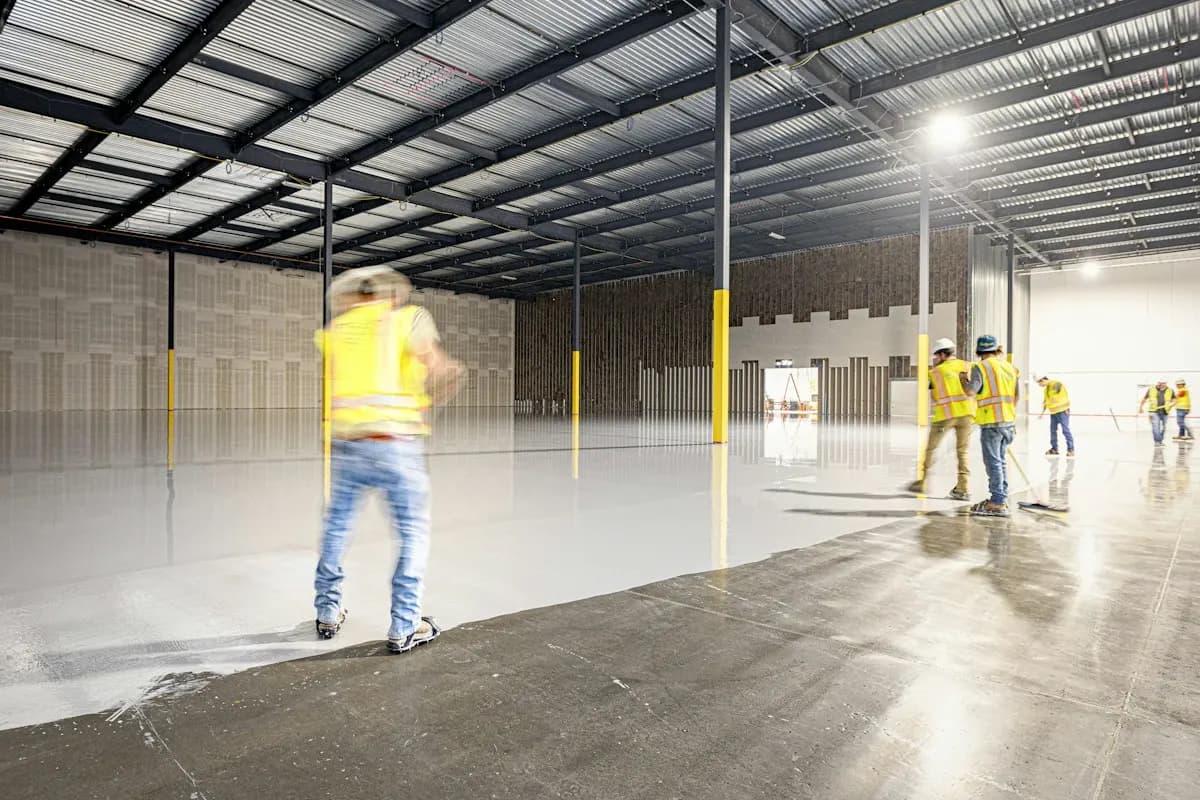
Craftsman prices shot blasting at $0.50 to $0.97 and moisture mitigation at $1.50 to $4 per square foot for ESD floors. Removal of an existing coating or tile adds further, and the old surface must be completely removed because conductive layers need a direct bond to prepared concrete. Craftsman prices filling control and construction joints with semi-rigid filler at $2.50 to $4.75 per linear foot before the coating goes down; crack repair is priced the same way or as an allowance.
Moisture is particularly important for ESD floors because a failing bond breaks the conductive path as well as the coating. Test before award and ask for a unit price for mitigation. On a small area, mitigation can rival the cost of the ESD coating itself, which is worth knowing before the budget is fixed.
ESD coatings are installed in more steps than an ordinary coating: preparation, primer, grounding, conductive layer, top layer, and testing, each with cure times. The installed price is therefore weighted toward skilled labor and time. Crews experienced with conductive systems are a smaller pool than general coating installers: BLS counts 97,000 jobs across the whole flooring occupation group and projects openings at about 6,400 per year, mostly replacement. That can affect availability and price in some regions.
Most areas need a few days out of service. Night and weekend phasing in operating electronics plants adds labor premiums and repeated setups, and cleanroom or data center protocols can add gowning and cleaning time. Ask bidders to price both continuous and phased schedules, and include the cost of relocating or protecting sensitive equipment in the project budget.
Much more per square foot than a large area. Craftsman cites a repair of about 75 square feet at up to $63 per square foot, because the crew, equipment, grounding checks, and testing are needed regardless of area. Small new rooms under a few thousand square feet sit at the top of the under-5,000 band.
To control small-area cost, bundle repairs with scheduled maintenance, combine several rooms in one visit, or consider ESD tile where layout changes are frequent. The coating versus tile comparison covers when tile's replace-by-the-piece repair model saves money. Budget for retesting after any repair, since the program needs proof that the repaired area meets its limits.
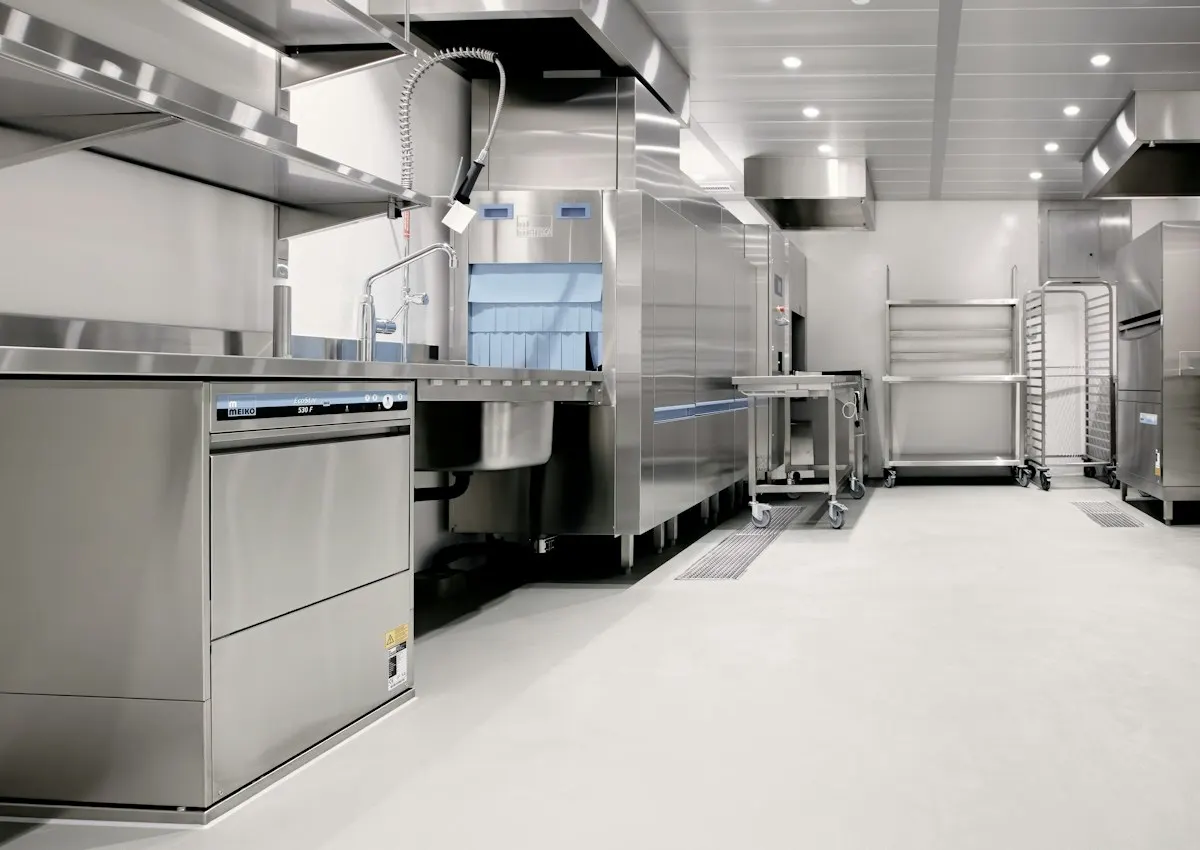
As materials alone, ESD epoxy is the cheapest option, and tile or carpet tile costs roughly three times as much. UltraStat's August 2026 price list puts ESD epoxy with sealers at under $2.00 per sq ft delivered, against $6.39 to $6.46 for ESD vinyl tile and $5.45 to $5.99 for ESD carpet tile. Installed resin prices are higher because preparation, grounding, and testing make up most of the cost.
The table in this section is UltraStat's seller pricing for materials only, delivered, with no labor, adhesive installation, grounding, or acceptance testing. It is useful for two decisions: whether tile's higher material cost is offset by a faster, simpler install in a small room, and what a topical ESD sealer costs for a floor that only needs static-dissipative treatment rather than a full system.
| Product (UltraStat, Aug 2026) | Material price per sq ft, delivered |
|---|---|
| ESD epoxy with sealers | Under $2.00 |
| ElectraTile 1x1 ft ESD tile | $6.39 |
| Titanium 2x2 ft glue-down ESD tile | $6.46 |
| UltraTech II ESD carpet tile | $5.45–$5.99 |
| ESD concrete sealer, three coats | Under $0.44 |
The main ongoing costs are periodic resistance retesting, cleaning with approved products, and repairing worn or damaged areas. Retesting frequency is set by the static-control program. Cleaning with the wrong products can raise resistance and trigger unplanned recoating, so the cleaning contract should specify approved products from the start and require notice before any product change.
Budget for retesting at the program's interval, for topcoat renewal where cart and foot traffic wear the surface, and for repairs after equipment moves or new anchors are drilled into the floor. The ESD service page covers the program side, including resistance categories and footwear, which affects how the floor is tested and maintained.
Check the specification first: the resistance range, the test methods, and the test locations and conditions. Then check the build: preparation method, moisture testing and mitigation allowance, conductive primer, grounding layout and connection, and the surface layer. Every one of these affects whether the floor meets the program at handover and still meets it at the next audit.
Then look at exclusions and assumptions: whether equipment relocation, cleanroom protocols, night work, or witnessed testing are included, and whether retesting after repairs is priced. Compare the unit price with Craftsman's $3.34–$13.55 per sq ft size bands for your area. A bid well below the band may be a thinner system or may exclude grounding or testing, so ask before accepting it.
Finally, ask for a sample acceptance report from a comparable completed floor. It shows how the contractor documents test locations, readings, and conditions, which is exactly what an auditor will ask to see later. A contractor who cannot produce one may not have delivered a documented ESD floor before, which is a risk worth pricing into the decision.
Cut area before cutting specification: limit the ESD floor to the protected areas the program actually defines, and use standard flooring in offices and corridors. University research buildings, part of the 1,827 million sq ft of college and university floorspace in our analysis of EIA's 2018 survey, often need ESD only in a few labs. Choose a standard color and finish, and schedule the work in larger continuous windows where production allows. Never cut grounding, acceptance testing, or preparation, since each is essential to compliance and bond.
Using Craftsman's bands, a 4,000 square foot assembly room would budget roughly $27,000 to $54,000, a 12,000 square foot electronics area $47,000 to $98,000, and a 50,000 square foot data hall $167,000 to $220,000, before preparation and mitigation. Run your own areas in the cost calculator specialty tier and compare with proposals through the proposal request.
By the numbers
Planning figures from published U.S. sources; every card links to where the number came from.
under $2.00 per sq ft
ESD epoxy with sealers sells for under $2.00 per sq ft delivered, material only (2026)
UltraStat's August 21, 2026 price page lists ESD epoxy with sealers at less than $2.00 per sq ft delivered, ElectraTile 1x1 ESD tile at $6.39, Titanium 2x2 glue-down tile at $6.46, UltraTech II ESD carpet tile at $5.45–$5.99, and ESD concrete sealer at under $0.44 per sq ft for three coats. Seller pricing for materials; no installation, grounding, or testing.
UltraStat, ESD flooring and ESD tile prices (2026)$3.34–$13.55 per sq ft
ESD flooring installs for $3.34–$13.55 per sq ft depending on project size (2025)
Craftsman Concrete Floors prices ESD floors at $6.70–$13.55 per square foot under 5,000 sq ft, $3.93–$8.15 for 5,000–20,000 and $3.34–$4.40 above 20,000 sq ft, tested to ANSI/ESD S20.20 and STM 97.1/97.2. Shot blasting adds $0.50–$0.97 and moisture mitigation $1.50–$4.00 per square foot.
Craftsman Concrete Floors, ESD flooring cost (2025)$3.59 per sq ft
Published ESD project: 67,000 sq ft Houston data center at $3.59 per sq ft (2025)
Craftsman publishes completed ESD projects: a 67,000 sq ft data center at $3.59, a 34,000 sq ft electronics plant at $4.21, a 114,760 sq ft battery plant at $3.91 and a 3,200 sq ft aerospace facility at $10.15 per square foot. Small repairs (75 sq ft) can hit $63 per square foot because of mobilization.
Craftsman Concrete Floors, ESD flooring cost (2025)97,000
Flooring installers and tile and stone setters held about 97,000 jobs (BLS 2025)
BLS' Occupational Outlook Handbook counts roughly 97,000 jobs in the flooring occupation group in 2025, including 45,200 tile and stone setters, 29,800 floor layers, 17,400 carpet installers and 4,700 floor sanders. A broad group covering residential and commercial work, not resin installers alone.
BLS Occupational Outlook Handbook, flooring installers and tile and stone setters (2025)The calculator uses the same commercial and industrial flooring benchmarks as this guide. Set the size and tier, then request a written estimate to check it against a real proposal.
Homeowner polls
No votes yet. Yours will be the first. · saved on this device
Stelr lists commercial polishing at $3–$8; Ace Avant lists urethane cement at $7–$18 by duty.
No votes yet. Yours will be the first. · saved on this device
No votes yet. Yours will be the first. · saved on this device
Because mobilization, grounding, testing setup, and supervision are fixed costs that do not shrink with area. Craftsman's figures run from $6.70 to $13.55 per square foot under 5,000 square feet to $3.34 to $4.40 above 20,000. Bundling small rooms into one project, or combining them with other flooring work, helps spread those fixed costs.
It should, but check. Some proposals include grounding and acceptance testing in the base price; others list them separately or exclude witnessed testing. Ask each bidder to confirm grounding layout, connection to building ground, test method, test locations, and the report format. A floor without documented testing cannot be relied on in an audit.
For large areas, coatings are usually cheaper to install per square foot according to Craftsman's size curve. Tile costs depend on the product and are not reliably published. Tile may be cheaper over time where layouts change often, because tiles can be lifted and relaid. Get pricing for both where the choice is open.
No published source gives a standard price, but retesting is usually a small cost compared with the floor. It is typically priced per visit or per area. The interval is set by the static-control program. Budget for it annually and after repairs or changes in cleaning products, rather than treating it as optional.
Sometimes an ESD system can be installed over a sound existing coating after preparation, which can save removal cost. However, the existing coating's bond and condition must be verified, and the conductive layer and grounding still need to be installed. Ask bidders to assess the existing floor and price both overlay and full removal options.
Yes, if slab moisture exceeds the system's limit. Craftsman prices mitigation at $1.50 to $4 per square foot. A failed bond breaks the conductive path as well as the coating, so moisture problems can affect compliance. Test before award and include a unit price for mitigation in the proposal.
For a single workstation or small bench area, ESD mats with grounding and wrist straps may be far cheaper than a new floor. The static-control program decides whether mats meet its requirements. An ESD floor becomes more economical when many workstations, mobile operators, or carts need protection across a larger area.
 Industrial Epoxy Flooring · Cost guideIndustrial epoxy and resin flooring cost in 2026
Published 2026 ranges put industrial epoxy systems at about $3 to $9 per square foot, MMA at $8 to $12, and urethane cement at $7 to $18 depending on duty, with large projects dropping to $4 to $8.
 Polished Concrete Floors · Cost guideCommercial polished concrete cost in 2026
Commercial polishing runs about $3 to $8 per square foot on a sound slab in 2026, with matte finishes at the low end and high gloss up to $15.
 Antimicrobial & Healthcare Flooring · Cost guideHealthcare and antimicrobial flooring cost in 2026
Published 2026 figures put healthcare-grade seamless resin at about $3 to $8 per square foot for epoxy and $8 to $15 for urethane cement, plus $2 to $4 per linear foot of integral cove.
 Service guideESD & Anti-Static Flooring
ESD flooring is a conductive or static-dissipative floor system, epoxy, urethane, vinyl tile, or rubber, bonded to a grounded conductive layer so that charge on people and carts drains safely.
Service guideIndustrial Epoxy FlooringIndustrial resin flooring is a family of seamless systems, epoxy, urethane cement, MMA, and hybrids, bonded to a prepared concrete slab and built to resist the chemicals, loads, temperatures, and cleaning a facility subjects it to.
Service guidePolished Concrete FloorsCommercial concrete polishing grinds and densifies the existing slab through progressively finer diamonds until it becomes a hard, dust-free wear surface.
 Free toolCommercial and industrial flooring cost calculator
Size, material tier and complexity in, a realistic budget range out.
 Free toolCommercial flooring comparisons
Side-by-side tables for the decisions that change the price most.
 Free toolIs your facility flooring requirement complete enough to bid?
8 questions that show what you already know and what to check next.
 Free toolFacility flooring polls: how other managers decided
See what other planners chose and add your vote.
Tell us the size, the condition of what is there now, and what you want to change. Facility Floor Scope passes your request to independent local professionals, who reply with written, no-obligation estimates. The service is free to use.