Which system did you specify, or are you leaning toward?
No votes yet. Yours will be the first. · saved on this device
Loading...
Facility Floor Scope · Polished concrete vs Resin coating
Polish the slab when the area is dry, the concrete is sound, and low downtime and upkeep matter most: warehouses, distribution, retail, and schools. Coat it when chemicals, spills, wash-down, or an unattractive slab rule out bare concrete, or when color coding and a seamless surface are required. Many facilities use both, zone by zone.
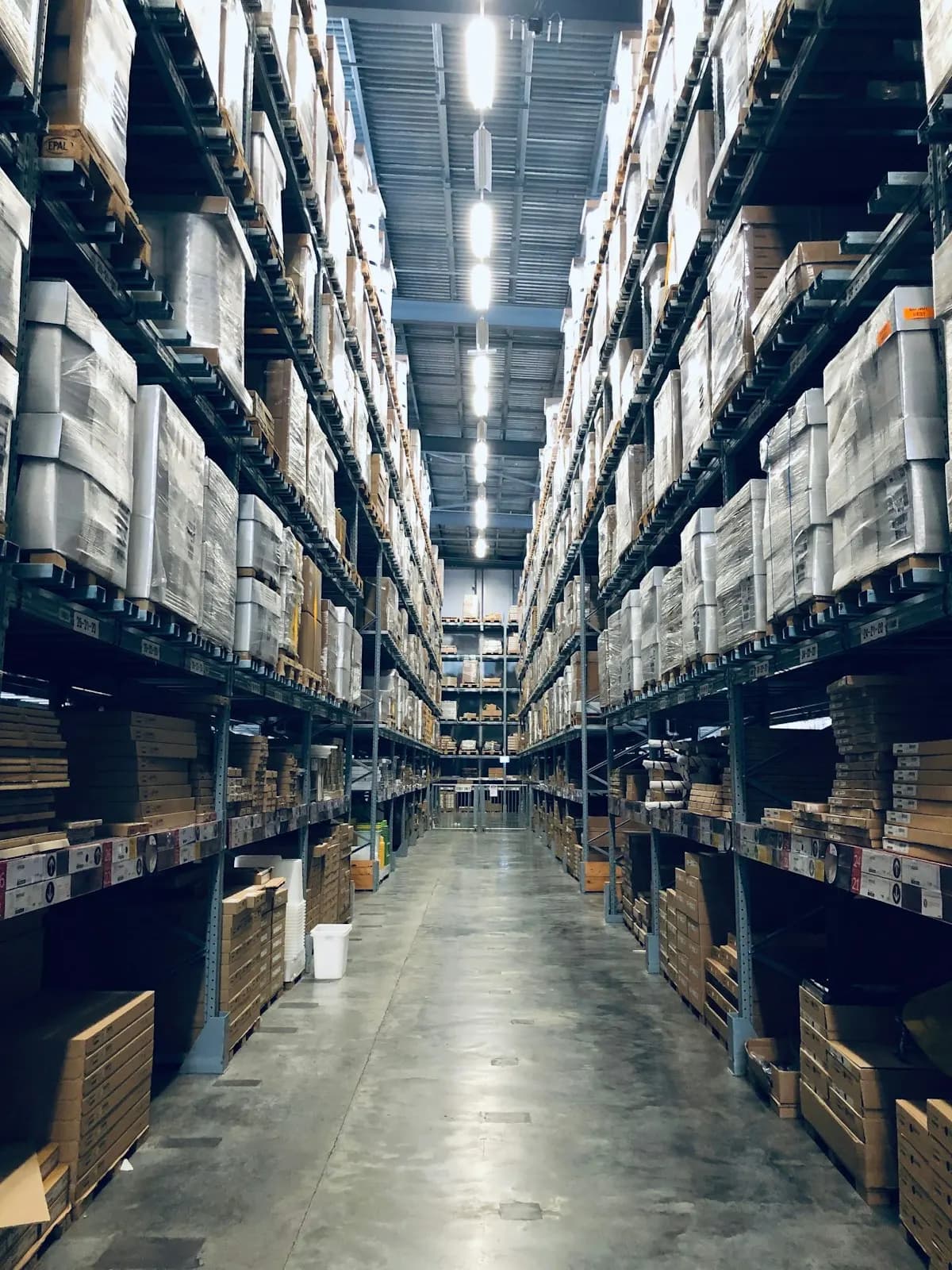
Photo: Ruchindra Gunasekara · License.
Warehouses and plants often face this choice when an old coating is worn out or a new building is being fitted out. Polishing sells itself on no cure time and low maintenance; coating sells itself on protection and appearance. The right answer depends on what reaches the floor, the condition of the slab, and how much downtime the operation can accept, more than on either system's marketing.
The sections below cover the facilities where each wins, a ten-year cost comparison from published figures, how slab condition and climate change the answer, and the mistakes that leave facilities with the wrong floor. The comparison table and verdict give the headline; the sections are the detail behind it, written for the facility team that has to justify the choice to operations and finance.
Polishing turns a sound slab into the wear surface: no cure, lowest ongoing cost, resealing every 3 to 5 years, but no chemical resistance and full exposure of the slab's flaws. A coating adds a chemical-resistant, seamless, colored surface at higher cost with a cure window and a recoat cycle, and hides repairs.
| Factor | Polished concrete | Resin coating |
|---|---|---|
| Installed cost per sq ft | $3–$8 commercial (Stelr 2026); $5–$12 example (Angi) | $3–$9 epoxy (Ace Avant 2026) |
| Downtime | None; grinding-pass speed only | 48–72 hrs to foot traffic (Terrapin); longer to chemical exposure |
| Ongoing cost | Reseal every 3–5 yrs at $0.85–$1.60 per sq ft (This Old House) | Topcoat recoat at roughly 8–10 yrs in traffic lanes |
| Lifespan | 20+ years (HomeAdvisor, Airtasker) | Varies with exposure; delaminates if mismatched |
| Chemical and stain resistance | Low; acids, sugars, hydraulic fluid etch and stain | High; per data sheet |
| Hides slab flaws | No; patches and cracks show | Yes; body coat and broadcast cover repairs |
| Best for | Warehouses, distribution, retail, schools, dry manufacturing | Wet or chemical areas, vehicle service, kitchens, anywhere the slab is ugly |
Polished concrete wins for large dry areas with a sound slab, which describes most warehouses and retail floors, a stock our analysis of EIA's 2018 survey puts at 7,050 million sq ft of warehouse and 4,487 million sq ft of retail store floorspace: it costs least to own, needs no cure, and cannot delaminate. Its weakness is that it tells the truth about the slab and does nothing against chemicals.
A coating wins where the exposure is chemical, wet, or where a colored, seamless, or flaw-hiding surface is required. Vehicle service bays, 267,000 buildings of them in the same count, battery rooms, kitchens, and any area with drains belong to the coating; the polishing candidate next door does not. Many facilities run both, and the transition detail is a line in both proposals.
Polishing wins in large dry spaces with heavy rolling traffic: distribution centers, big-box retail among the 296,000 retail store buildings in our CBECS count, schools, and dry manufacturing. EIA's building survey counts 7.998 billion sq ft in distribution and shipping centers alone, most of it bare or sealed concrete, and polishing is the most common upgrade for that stock. There is no coating to peel under forklift turning, and no cure to wait for.
Coating wins where anything aggressive reaches the floor: battery charging areas, vehicle service bays in the 267,000 vehicle service or repair buildings in the same survey, chemical storage, commercial kitchens, and wet processing. It also wins where the slab is badly stained, patched, or cracked, because polishing exposes every flaw. And it wins where color-coded safety zones, a bright reflective surface for lighting, or a seamless cleanable finish are requirements rather than preferences.
For a 20,000 square foot warehouse, Stelr's price for projects of 10,000 square feet or more, $3–$6 per sq ft, gives roughly $60,000 to $120,000 installed, and This Old House's reseal cycle of every 3–5 years at $0.85 to $1.60 per square foot adds about $17,000 to $32,000 per reseal, or two resealings in a decade. Daily dust mopping and auto-scrubbing continue as normal.
Ace Avant's epoxy range of $3 to $9 gives about $60,000 to $180,000 installed for the same area. Topcoats in traffic lanes typically need renewal as they wear, and each recoat means preparation and a cure window. Over ten years the two can land close together in a dry warehouse. Spread over each system's full life, the gap widens: AIcoat annualizes polished concrete at $0.15 to $0.30 per square foot per year and high-build epoxy at $0.35–$0.55 per sq ft per year. Even so, downtime and chemical exposure usually decide the question rather than cost alone.
| 20,000 sq ft dry warehouse | Polished concrete | Resin coating |
|---|---|---|
| Installed cost | $60,000–$120,000 (Stelr, 10,000+ sq ft band) | $60,000–$180,000 (Ace Avant) |
| Periodic upkeep | Reseal every 3–5 yrs (This Old House) | Topcoat recoat as traffic lanes wear |
| Downtime per intervention | Minimal; no cure | Preparation plus cure window |
| Chemical protection | Low | High, per data sheet |
| Annualized cost per sq ft (AIcoat 2026) | $0.15–$0.30 over 20+ yrs | $0.35–$0.55 high-build epoxy over 12–15 yrs |
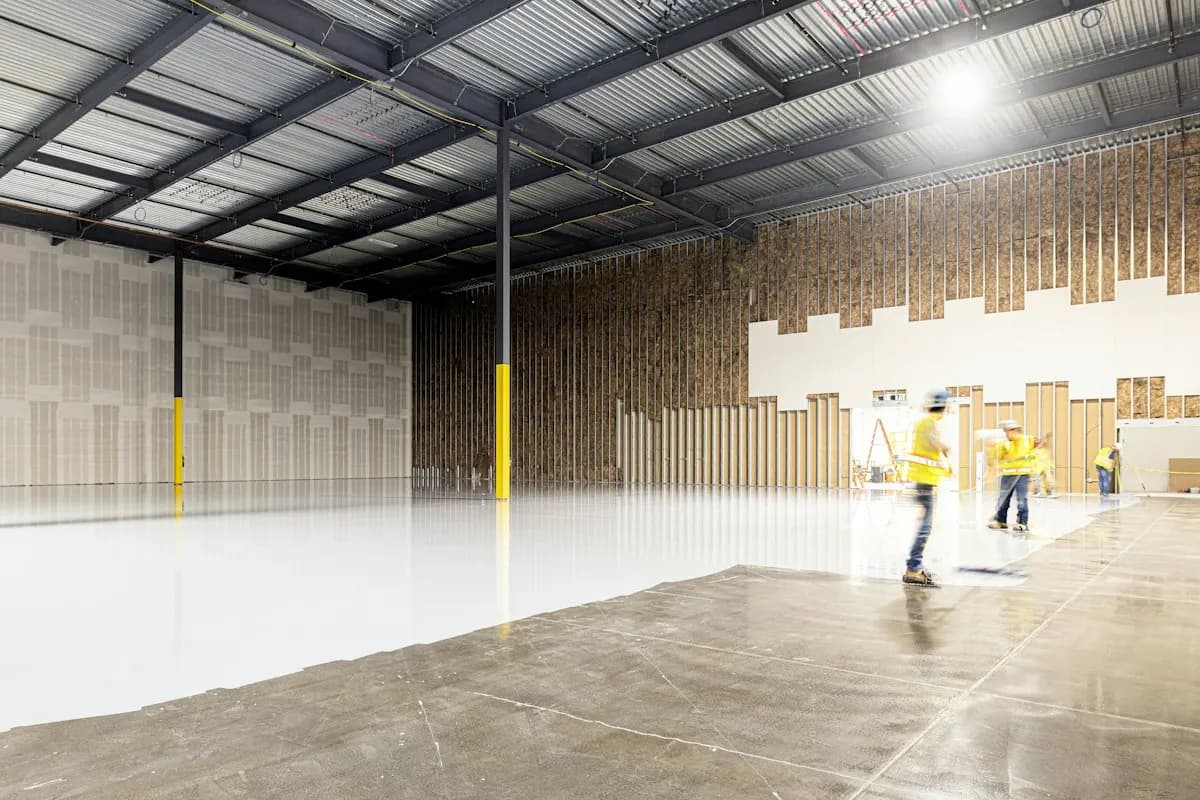
Polishing depends entirely on the slab. It needs sound concrete of adequate strength, and it will show old stains, patch lines, and cracks. A slab with extensive oil contamination, surface scaling, or many repairs may polish unevenly. HomeAdvisor, whose guide spans $2–$16 per sq ft by complexity, notes that commercial slabs often need higher-strength concrete for a good result. A small test area is the only reliable way to see what a given slab will look like.
Moisture works the other way. Polished concrete is breathable, so vapor emission from the slab does not cause blistering. Coatings, especially thin epoxy, can blister or lose bond over a high-moisture slab unless a mitigation layer is added, which Craftsman prices at $1.50 to $4 per square foot. In older buildings without vapor retarders, that difference alone can tip a dry area toward polishing.
A polished floor can be coated later if the operation changes, after thorough preparation to remove densifier and guard and restore a bondable profile. A coated floor can be removed and the slab polished, although removal adds cost and the slab underneath may be stained or scarred. Neither path is free, so think about where the building's use is heading over the next ten years.
For owners, polished concrete is a neutral, widely accepted finish for industrial and logistics tenants. A coating in good condition is an asset to a tenant who needs one and a removal job for one who does not. If the facility is leased, check whether the landlord will accept either finish as a permanent improvement, and whether the lease requires restoration at the end of the term.
In a busy warehouse the floor's weak points are the control joints, the dock plates, and the turning areas at aisle ends. On polished concrete, joint edges spall if the joints are left open or filled with a soft material, so a semi-rigid joint filler is part of any serious polishing scope. The polished surface itself resists abrasion well because it is the densified slab rather than a layer on top.
On a coated floor, the coating bridges the slab but must still be cut or detailed at moving joints, and thin systems wear through first where loaded forklifts pivot. Heavier broadcast systems or mortar builds hold up better in those zones. Hard nylon or steel wheels and dragged pallets are harder on any surface than polyurethane wheels, so state the wheel type and the heaviest loaded truck in the brief.
For either floor, ask how the contractor will treat joints, what they expect to wear first under your traffic, and what a repair costs. A contractor who can answer those questions precisely, with examples from comparable buildings, has usually seen the same traffic pattern before and priced its consequences into the bid.
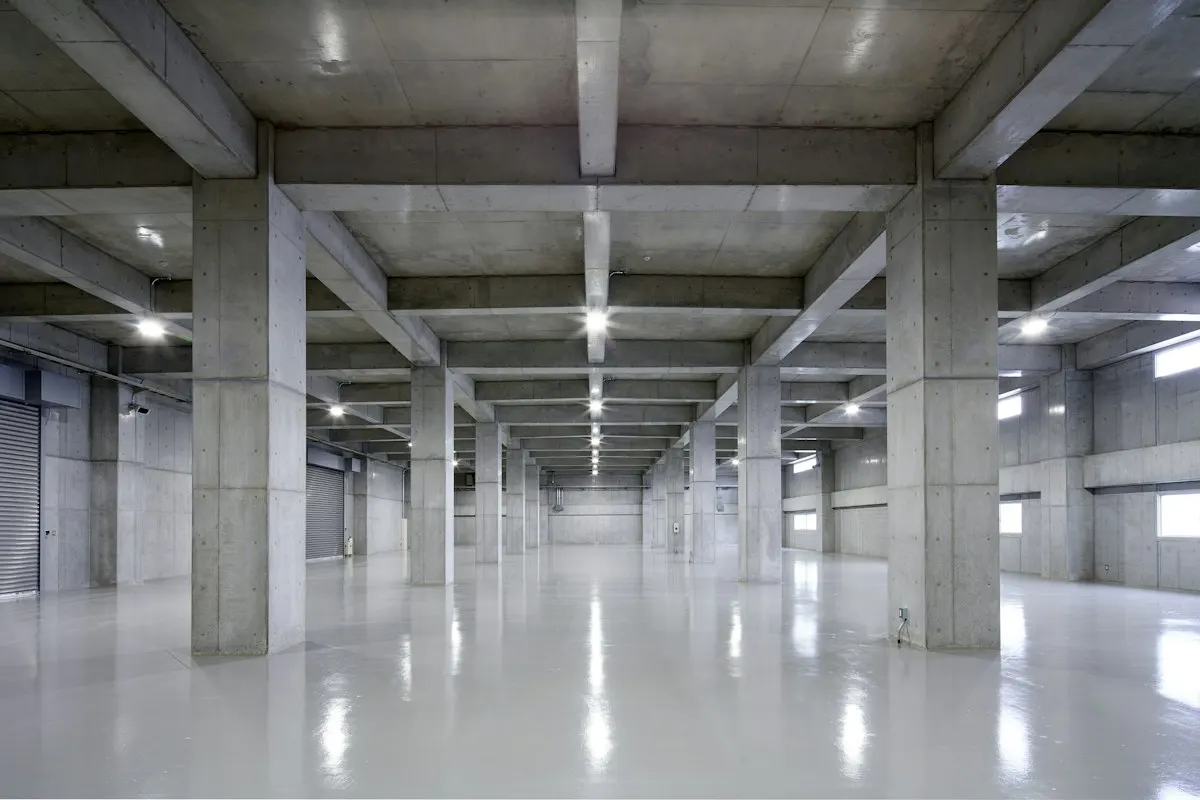
With polishing, the common regrets are expecting a showroom gloss from a heavily patched slab, skipping a mockup, and using acidic cleaners that etch the surface. Another is polishing an area that later gets battery charging or chemical storage, where spills etch the concrete. With coatings, the regrets are thin systems in forklift turning areas, poor preparation leading to peeling, and skipping moisture tests.
A mistake common to both is treating the whole building as one zone. A distribution center might polish the racked storage area and coat the battery charging room, maintenance shop, and dock approaches. The polished concrete page explains gloss levels and slab checks, and the resin flooring page covers coating systems by exposure.
One more regret is worth naming: choosing on appearance alone from a photograph of someone else's building. Both floors depend on the slab, the traffic, and the cleaning program in your facility. A small test area of each, cleaned with your own equipment for a few weeks, shows more than any brochure and costs little compared with the floor.
For polishing, ask for the gloss level, number of grinding passes and final grit, densifier and guard products, joint filling method, crack and patch repair approach, and the expected appearance based on a test area. For coatings, ask for thickness, preparation method and profile, moisture testing and mitigation allowance, topcoat type, and cure times by traffic type at your slab temperature.
Then compare both on ten-year cost including maintenance and downtime, not on installed price alone. Run each through the cost calculator and read the polishing cost guide for per-square-foot ranges by gloss and size. Ask each contractor what their system would not tolerate in your operation; the honest answers are often the most useful part of the proposal.
Homeowner polls
No votes yet. Yours will be the first. · saved on this device
No votes yet. Yours will be the first. · saved on this device
No votes yet. Yours will be the first. · saved on this device
Yes, after grinding to remove the densified, polished surface and re-profiling for the coating; a polished surface is too smooth and hard for adhesion without it. Budget the preparation as if for a bare slab.
Both handle rubber-tired trucks. Hard polyurethane wheels pivoting in the same spots wear polished lanes and abrade coating topcoats; joint edges spall on polished floors without filler. Specify wheel type in the brief and, for polishing, flush-filled joints.
Both can raise light reflectance compared with bare concrete. A high-gloss polish reflects well, and a light-colored coating can reflect more, especially in gray or white. Reflectance depends on color, gloss, and cleanliness. If lighting is a goal, ask for reflectance data or view a mockup under the facility's actual fixtures before deciding.
Polished concrete repairs are usually patched and re-polished, and the patch often remains visible. Coating repairs are ground out and recoated, and color matching can be tricky on older, UV-faded surfaces. Neither is invisible. For areas with frequent impact, such as dock plates, plan for periodic repair in either system and budget accordingly.
Polished concrete is generally slip resistant when clean and dry, but contaminants such as oil, dust, or water reduce traction. Facilities with wet areas may ask for a lower gloss, a slip-resistant guard, or a measured slip target. Specify the test method and value in the brief, then confirm it on the finished floor rather than assuming the finish meets it.
Partly. Aisles can be polished around fixed racking, but edges under the beams and around base plates need smaller equipment and cost more per square foot. Moving racking gives a more uniform result but adds cost and disruption. Ask each bidder to price both approaches and to state how they will treat edges around fixed equipment.
Polished concrete is a neutral, low-maintenance finish widely accepted by industrial buyers and tenants. A coating in good condition is an asset to a buyer who needs one and a removal job for one who does not. If resale is likely and exposure permits, polishing usually carries less risk of being seen as a liability.
 ComparisonEpoxy coating vs Urethane cement
Choose urethane cement where the floor sees hot water or steam cleaning, thermal swings, freezers, or daily wash-down; choose epoxy for dry manufacturing, warehousing, and light chemical exposure.
 ComparisonESD epoxy or urethane coating vs ESD vinyl tile or sheet
Choose an ESD resin coating for large, permanent layouts, wash-down or solvent exposure, and data centers where a seamless surface matters.
 ComparisonWelded sheet vinyl or rubber with flash cove vs Seamless resin with integral cove
Use heat-welded sheet vinyl or rubber with flash cove in patient rooms, corridors, clinics, and procedure rooms, where overnight turnaround, comfort, and quiet matter.
 ComparisonMMA (methyl methacrylate) vs Urethane cement
Choose MMA when the floor must be back in service within hours, or installed in a cooler or freezer, and odor can be isolated: overnight retail, restaurants, cold storage.
 Service guideIndustrial Epoxy Flooring
Industrial resin flooring is a family of seamless systems, epoxy, urethane cement, MMA, and hybrids, bonded to a prepared concrete slab and built to resist the chemicals, loads, temperatures, and cleaning a facility subjects it to.
Service guidePolished Concrete FloorsCommercial concrete polishing grinds and densifies the existing slab through progressively finer diamonds until it becomes a hard, dust-free wear surface.
 Service guideESD & Anti-Static Flooring
ESD flooring is a conductive or static-dissipative floor system, epoxy, urethane, vinyl tile, or rubber, bonded to a grounded conductive layer so that charge on people and carts drains safely.
 Service guideAntimicrobial & Healthcare Flooring
Healthcare flooring covers seamless resin, welded sheet vinyl and rubber, and coved, drained systems chosen so that a facility's cleaning and infection-control program can be carried out on them.
 Free toolCommercial and industrial flooring cost calculator
Size, material tier and complexity in, a realistic budget range out.
 Free toolIs your facility flooring requirement complete enough to bid?
8 questions that show what you already know and what to check next.
 Free toolFacility flooring polls: how other managers decided
See what other planners chose and add your vote.
Tell us the size, the condition of what is there now, and what you want to change. Facility Floor Scope passes your request to independent local professionals, who reply with written, no-obligation estimates. The service is free to use.